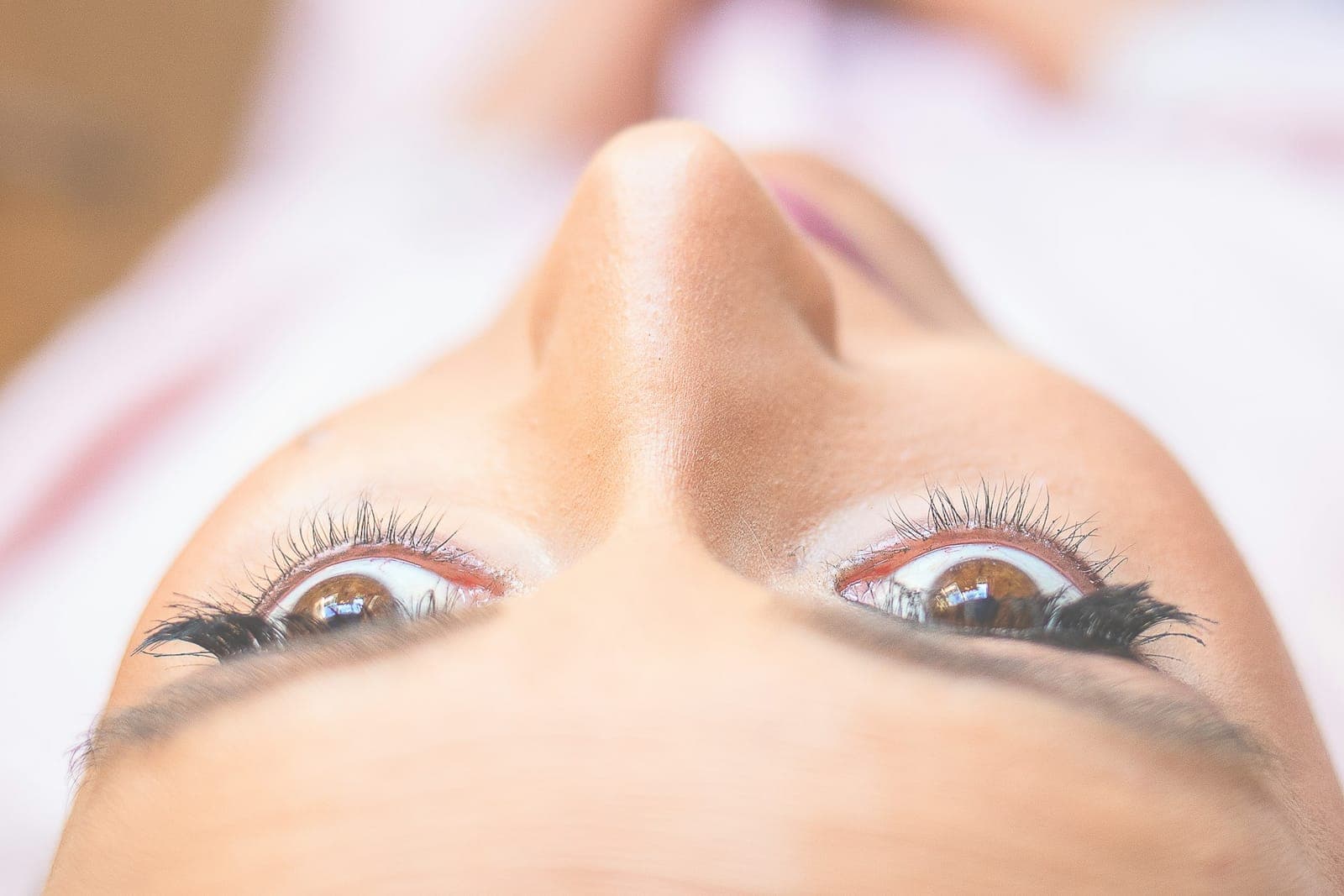
I have applied thousands of lash sets since I started, and I've seen stunning results disappear within a week — not because of bad glue or poor technique, but because of zero aftercare. I've also seen clients keep immaculate lashes for six full weeks with just a few simple, consistent habits.
The truth is that the longevity of your extensions depends roughly 50% on your technician and 50% on you. This guide brings together everything I explain to every client after their appointment. Whether you already have lash extensions or are considering your first set, you'll find precise, science-backed answers here that you can apply starting today. And if you're still choosing between Russian volume and classic, my guide Russian Volume vs Classic Lash Extensions will help you pick the right technique for your lashes.
The First 48 Hours: The Science Behind the Rule
Most clients hear "no water for 48 hours" without understanding why. Here's the explanation: the adhesive used for lash extensions is a cyanoacrylate resin. The moment it is applied, a chemical reaction called polymerization begins — initiated by ambient humidity — and it continues for 24 to 48 hours after the appointment.
During this window, the bond between the extension and your natural lash is not yet at full strength. Premature contact with water, steam, or oils disrupts polymerization and creates weaker bonds that fail far earlier than they should.
What to strictly avoid in the first 48 hours:
- Direct water — no shower with your face under the stream, no pool, no bath.
- Steam — steam room, sauna, cooking over a boiling pot, or holding a hairdryer too close to your face.
- Oily products — eye cream, oil-based makeup remover, rich serums — keep everything containing oils away from the lash line.
- Rubbing or touching — resist the urge to adjust your lashes; even a gentle touch can compromise the curing bond.
- Eye makeup — mascara, eyeliner, eyeshadow — anything applied near your lashes should wait.
- Sleeping face-down or on your side without protection — your extensions will press against the pillow before the adhesive has finished curing.
The rule to remember: any disruption to polymerization reduces retention permanently. What goes wrong in these 48 hours cannot be corrected afterward.
The Cleaning Routine: The Counter-Intuitive Habit That Changes Everything
Here is the piece of information that surprises clients most: you should wash your lash extensions every single day. The natural instinct is to minimize contact with water to preserve them. That instinct is exactly wrong.
Unwashed lashes accumulate sebum, dead skin cells, makeup residue, and bacteria. This buildup forms a greasy layer at the lash base that degrades adhesive far faster than a daily cleaning routine ever would. It also creates a real risk of blepharitis — an eyelid inflammation that can require full lash removal to treat.
Step-by-Step: How to Clean Your Lash Extensions
- Wet your lashes with lukewarm water — let it flow gently, not under high pressure.
- Apply an oil-free foam cleanser (specifically formulated for extensions, or a mild surfactant-based formula) to a soft brush or directly onto your lashes with clean fingertips.
- Brush gently in small circular motions, focusing at the lash base where sebum collects, without pressing hard.
- Rinse thoroughly by letting clean water flow over your lashes — never rub.
- Pat dry with a clean cloth or lint-free paper. Never rub dry.
- Brush with a clean spoolie while the lashes are still slightly damp, sweeping from root to tip to realign them.
This routine takes under two minutes. Once a day — morning or evening depending on your schedule — and your extensions will last significantly longer.
Products: What to Use, What to Ban
The number-one enemy of lash extensions is oil. Cyanoacrylate breaks down on contact with fatty compounds — the bond weakens gradually until it fails. And oils hide in many everyday cosmetic products you would never suspect.
| Use | Avoid |
|---|---|
| Oil-free foam cleanser for extensions | Bi-phase or oil-based makeup remover |
| Oil-free micellar water (check the INCI list) | Standard cotton pads (fibers snag) |
| Clean, soft spoolie | Mechanical or heated eyelash curler |
| Water-based mascara, tips only | Waterproof mascara |
| Silk or satin pillowcase | Standard cotton pillowcase |
| Lash serum without carrier oils | Coconut, argan, or castor oil directly on lashes |
| Lint-free applicators | Standard makeup wipes |
How to Read the INCI List
To check whether a product is safe for your extensions, look for these ingredients in the INCI list and keep them away from your lash line: Mineral Oil, Cyclopentasiloxane, Dimethicone, Isopropyl Palmitate, and any ingredient ending in -ate or -oil. Even some micellar waters contain esters that gradually erode adhesive bonds with repeated use.
A Note on Lash Growth Serums
Biotin and peptide serums are popular right now, but many contain carrier oils or prostaglandins that can alter the shape and diameter of your natural lashes — making placement far more difficult. If you want to use a serum, apply it only at the root, away from the adhesive bond, and discuss the formula with your lash technician before starting.
If you're curious about the techniques I teach — including how cosmetic product chemistry interacts with adhesive retention — visit my Qualiopi-certified training programs.
Sleep: Protecting Your Lashes Through the Night
A third of your extensions' lifespan is decided during your sleeping hours. Here are the adjustments that make a genuine difference.
Sleep Position
Sleeping on your back is ideal. No contact between your lashes and the pillow, no deformation. If you naturally sleep on your side, invest in a horseshoe-shaped travel pillow — you can rest your head without your face touching any surface. Memory foam versions are particularly comfortable for everyday use.
Pillowcase Material
A cotton pillowcase creates friction and absorbs the natural oils from your skin, which migrate toward your lash line during the night — a double disadvantage for your extensions. Switch to a silk or bamboo satin pillowcase: the surface glides, reduces friction, and does not draw oils away from your skin.
Overnight Masks and Rich Night Creams
Nourishing overnight masks and thick eye creams applied near the eye contour will migrate during sleep and inevitably contact your adhesive. Apply them below the cheekbone and never on the eyelid or within two centimeters of the lash line.
Sport, Swimming, Heat: What Is Fine After 48 Hours
Once you've cleared the 48-hour window, you return to normal life — with a few mindful adjustments for certain activities.
Pool and sea: chlorinated water and salt water weaken the adhesive bond over time, especially with prolonged, repeated immersion. After every swim, rinse your lashes under fresh water and brush them with your spoolie. Avoid swimming goggles that are too tight — the pressure on the lash zone compresses the extensions and stresses the adhesive.
Indoor sport: no problem at all. Sweat is water-based and easily removed with your regular post-workout cleaning routine.
Sauna and steam room: after oils, prolonged moist heat is the fastest way to degrade adhesive. The heat softens the resin cumulatively with each visit. If you regularly use steam rooms, plan closer refills — every two to three weeks rather than four.
Hairdryer: always use the cool-air setting, held at least 30 cm from your face. Direct heat — even on a low temperature — softens cyanoacrylate and can permanently deform extensions.
The Natural Lash Cycle and Your Refill Schedule
Your natural lashes have their own biological lifecycle. Each lash passes through a growth phase (anagen), a transition phase (catagen), and a shedding phase (telogen), over a total cycle of 6 to 8 weeks. Your extension sheds with the natural lash it is bonded to — this is why regular refills are necessary to maintain a full look.
- At 3 weeks: approximately 60–70% of extensions remaining — quick refill, flawless result.
- At 4 weeks: approximately 40–50% remaining — standard refill, still a very satisfying result.
- At 5–6 weeks: fewer than 30% remaining — heavy refill or full set likely needed.
- Beyond 6 weeks: a full new set in most cases.
Refill regularity is directly tied to your total cost and appointment time. Waiting too long is more expensive than a timely refill every 3–4 weeks.
If your extensions shed heavily before the three-week mark despite good aftercare, the most common causes are: an undetected oily product in your routine, naturally oily skin at the lash root, a mild reaction to the adhesive, or a placement issue to review with your technician. Come in for a consultation rather than waiting for your next refill.
You can view all of my lash extension services to book your next appointment in Toulouse.
Removal: Why I Ask You Never to Do It Yourself
It is the question I get most after "how long does it last", and it is where I see the most damage. You want to stop wearing extensions, or start again from a clean base, and you look for a way to take them off at home.
The honest answer is that there is no safe home method. The adhesive is a cyanoacrylate: it does not dissolve in hot water, steam or makeup remover. Plant oil, the advice you find on every forum, softens the bond just enough to feel like progress, while you are in fact pulling on extensions that are still attached. Every natural lash torn out before the end of its cycle takes six to eight weeks to grow back, and repeating that thins the lash line for good.
In the studio, removal is done with a professional remover, gel or cream, laid on the lash line and left for a few minutes. It dissolves the resin, the extensions come away on their own, with no pulling at all. It takes about twenty minutes, and your natural lashes come out untouched.
- If you want to stop: book a removal rather than letting the set fall out on its own. A set left six weeks without a refill tangles and breaks natural lashes by friction.
- If a single extension bothers you, badly placed or twisted: do not pull it, do not cut it. It comes off in thirty seconds in the studio.
- If you have a medical procedure coming up (MRI, eye surgery), tell the practitioner and plan a removal beforehand if they ask for one.
A professional removal costs a fraction of a full set, and far less than a year spent waiting for your lash line to recover.
Irritation or Allergy: Telling Them Apart, and What to Do
This needs saying plainly, because it is rare but real, and because the two are often confused when they have neither the same cause nor the same answer.
Irritation shows up during or right after the appointment. Your eyes sting, water, the white of the eye reddens. It is a reaction to the adhesive fumes, often because the eyes opened slightly during the session, or because you were sensitive that day. It settles within hours, and it does not rule out another set later.
An allergy is another matter. It usually appears 24 to 48 hours after the appointment, with swollen lids, redness that sets in and itching that persists. It can appear after several sets you tolerated perfectly, because sensitisation builds with repeated exposure. And it tends to worsen with each new set.
- For simple irritation: cool compresses, no rubbing, and tell your technician so the next session can be adapted.
- For a reaction lasting more than 48 hours, swelling or spreading: see a doctor or your pharmacist. I do not diagnose and I do not prescribe, it is not my trade.
- Tell me either way. A known reaction changes the protocol, and sometimes the adhesive.
What I do on my side to limit the risk: a contraindication questionnaire before a first set, an adhesive matched to your sensitivity when you report one, proper ventilation at the workstation, and never a set on an already irritated eye, even if the appointment is booked.
A confirmed adhesive allergy means stopping extensions, not changing technician. In that case a lash lift, which glues nothing onto the lash, is the alternative I most often suggest.
Small Mistakes That Cost You Extensions
Here are the habits I see most often in clients who come back after two weeks with very few extensions remaining:
- Rubbing your eyes when you wake up or when tired — this single gesture removes more extensions in seconds than almost anything else.
- Pulling extensions by hand to reposition them — each tug weakens the bond and risks pulling the natural lash out with the extension.
- Using an eyelash curler — even gentle rubber models apply mechanical pressure directly on the adhesive.
- Using a hot hairdryer — direct heat softens the resin even at low settings.
- Skipping the daily brush — extensions that are not brushed daily cross over each other and fuse together, becoming nearly impossible to separate without breaking.
- Applying waterproof mascara — removing it requires an oil-based remover, which is incompatible with extensions.
FAQ
Yes, after 48 hours. Use only a water-based mascara applied to the tips of the extensions — never near the adhesive bond. For eyeliner, choose an oil-free formula and avoid waterproof versions. Always remove makeup with an oil-free product and lint-free applicators.
You do not. The adhesive is a cyanoacrylate: it gives way to neither hot water, steam nor makeup remover. Plant oil softens the bond just enough to feel like progress, and you end up tearing out natural lashes that will take six to eight weeks to grow back. A professional removal takes about twenty minutes, with a remover that dissolves the resin without any pulling.
Irritation appears during or right after the appointment, stings, makes your eyes water, and settles within hours. An allergy shows up rather 24 to 48 hours later, with swollen lids and itching that persists, and it can appear after several sets you tolerated well. If the reaction lasts beyond 48 hours, swells or spreads, see a doctor or your pharmacist: I do not diagnose. Tell me either way, it changes the protocol.
The most common causes are: an oily cosmetic product used near the lashes (check the INCI of your night cream, micellar water, and foundation), rubbing your eyes, sweat left uncleaned, or regular exposure to moist heat. If your extensions last fewer than two weeks despite good aftercare, discuss the cause directly with your technician.
Only on the cool-air setting, held at least 30 cm away. Direct heat — even at low temperature — softens the cyanoacrylate resin and can permanently deform extensions. Air drying or a cool-setting fan from a safe distance is always preferable.
Yes — ideally morning and evening with a clean spoolie. Daily brushing realigns extensions, prevents them from crossing or fusing together, and maintains a full, even appearance. Brush from root to tip with a light touch.
Typically 3 to 4 weeks, depending on your natural lash renewal cycle. Clients with faster cycles return at 3 weeks; those with more stable lashes can wait 4 to 5 weeks. Your technician will guide you after your first appointment.
Yes, after 48 hours. Always rinse your lashes under fresh water after a pool or the sea, since chlorine and salt weaken adhesive over repeated exposure. Avoid tight-fitting goggles that press against the extension zone.

Lash extension aftercare is a discipline that takes minutes a day and makes an enormous difference in how your lashes look and how long they last. Every client who follows these habits leaves with results that genuinely impress — and that's exactly what I aim for with every set I apply in Toulouse. Whether you'd like to book a lash appointment or learn these techniques professionally, I'm here to help.