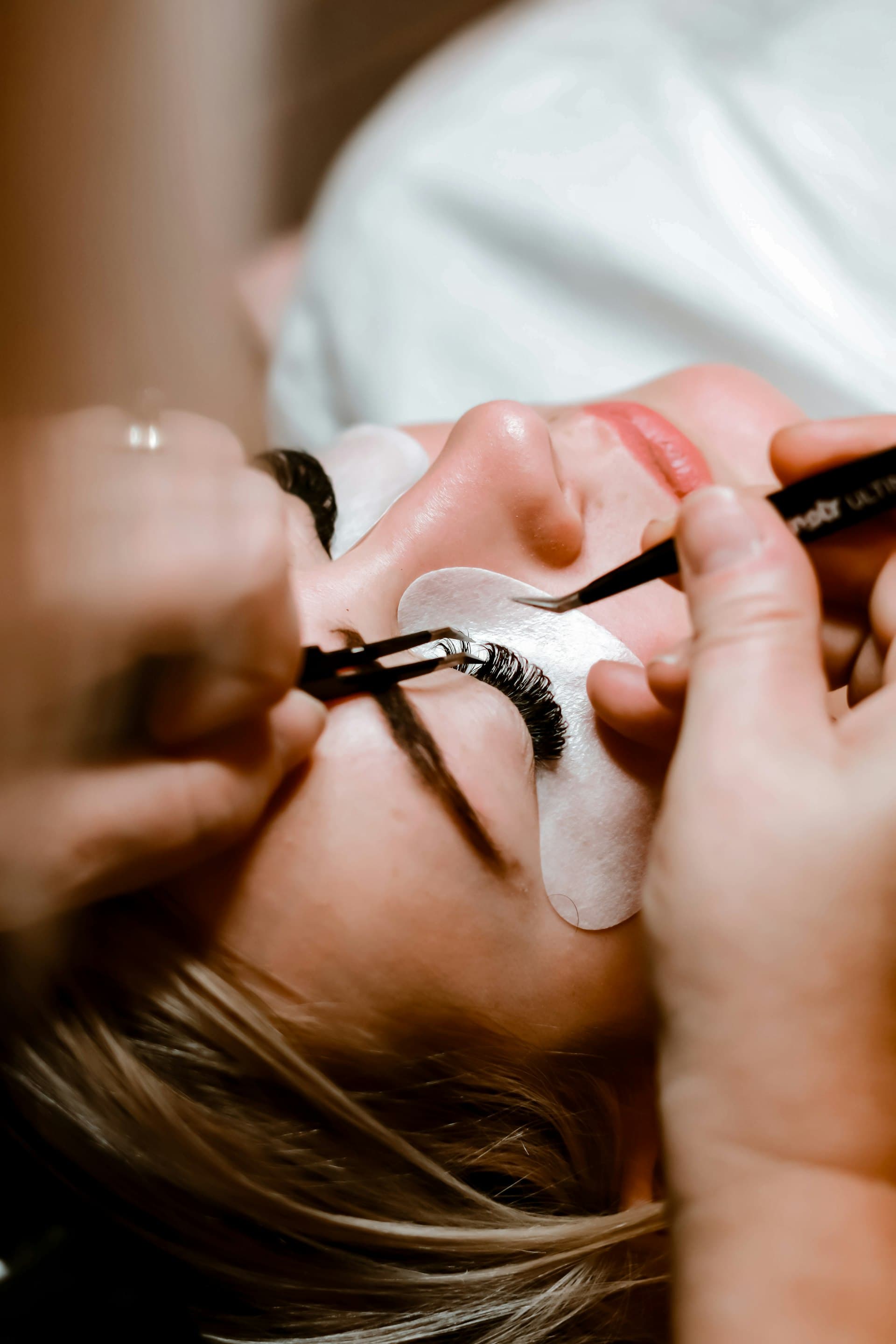
"Kristina, do I get a diploma at the end?" It is the question I am asked most often, right before someone enrols, and it deserves better than a salesperson's yes. The honest answer is no: there is no eyelash extension diploma in France. What exists is three different documents that the industry's vocabulary blends together constantly, and only one of them carries a value you can verify online.
Here is what each is worth, and how to check in three minutes what a school is actually promising you.
No, there is no eyelash extension diploma
In France, the word diplôme is not an advertising adjective. It is a document issued in the name of the State, by a ministry, and registered in the national register of professional qualifications. The CAP, the vocational baccalaureate and the BTS are diplomas.
None of them covers eyelash extensions. The technique is too recent and too specialised to have its own state pathway: it is learned through continuing professional training, after another course or after a career change, never in a vocational secondary school.
So a school selling you an "eyelash extension diploma" is using the wrong word, at best. What it can legitimately issue you is something else, and that is precisely what you need to be able to read.
The three documents everyone confuses
| The document | Who issues it | What it proves | CPF-fundable |
|---|---|---|---|
| State diploma (CAP esthétique) | A ministry, through the national education system | A full beauty-therapy course, assessed by examination | Yes, but it is a long programme |
| Professional certification (RS) | An approved certifier, registered by France Compétences | Specific skills, assessed at the end of the training | Yes, while it is active |
| Certificate of attendance | The training centre itself | That you were there, and nothing more | No |
The bottom row is the problem. A certificate of attendance is an internal document: it is written in a word processor, it binds only the person who signs it, and nobody can verify it. That is not illegitimate in itself, and plenty of serious courses issue one for an advanced module. It becomes illegitimate when a sales page calls it a diploma.
The CAP esthétique: useful, never required to apply lashes
This is the second confusion, and it costs some women months of a project postponed for nothing.
The CAP esthétique-cosmétique-parfumerie is not required to practise eyelash extensions. Applying lashes is not an act reserved for holders of a state diploma. Hundreds of technicians work in France today without a CAP, entirely lawfully, with professional training and professional liability insurance.
There is a nuance worth settling before you open your own studio: if you plan to add classic beauty treatments to your activity, waxing or facials for instance, you move into an activity whose professional qualification is regulated. That is a different question, answered with a CAP, an equivalent qualification or an accreditation of prior experience. For an activity centred on the eyes, lashes and brows, it does not arise.
The CAP remains a sound investment if your project is a full beauty salon. It is not a prerequisite for making a living from lash extensions.
What a registered certification is worth
This is the document that actually counts, and the only one you can verify yourself.
A certification in the Répertoire spécifique carries a number, an official title and an identified certifier. It validates skills assessed at the end of the course, not attendance. And because France Compétences has registered it, it opens the door to funding through the personal training account.
Both of our in-person eyelash extension courses prepare the RS7459 certification, held by our partner certifier and registered until 18 December 2027. It is the same document at the end of both formats, the three-day one and the five-day one: two ways in, with more or fewer hours of practice, not a course and its sequel.
One point of honesty, rarely made: a Répertoire spécifique certification is not a diploma, and does not replace a CAP. It attests to a precise professional skill, recognised by the State that registered it, and that is exactly what the eyelash extension market asks for.
Qualiopi does not certify the trainee
The third confusion, and the most common on sales pages: the Qualiopi logo is not your diploma.
Qualiopi certifies the organisation, not you. It is an audit of the training process: how the centre analyses needs, builds its content, assesses its trainees, handles complaints. It is a mark of seriousness, and it is the condition for a course to be fundable from public or pooled funds. But at the end of your training, it is not Qualiopi that appears on your document: it is the title of the certification, or of the attendance certificate.
A Qualiopi-certified school that only issues a certificate of attendance is still a school that issues a certificate of attendance.
The rule I give everyone who calls me: ask for the exact name and number of the document you will hold on the last day. If the answer is slow, or stays vague, you have your answer.
Checking a promise in three minutes
You do not need anyone to settle this, least of all me. Three steps are enough:
- Ask for the exact title and number of the certification being prepared, in writing. A serious centre answers in one sentence, because it already displays them.
- Search that number on the France Compétences website. The public record gives you the certifier, the skills assessed and the registration end date. If there is no record, there is no certification.
- Look at the registration end date. An expired certification sometimes stays on the websites that were selling it for months. This is the check almost nobody runs.
Add a fourth if you are paying yourself: ask for the detailed programme, day by day, with the number of real models you will work on. That figure, more than the name of the document, will decide your level when you walk out. I go into this in my guide on choosing an eyelash extension course.
What this changes for your project
In practice, three things get you started, and a diploma is not one of them: a real skill, professional liability insurance, and a legal status, the French micro-enterprise in the vast majority of cases. The document itself matters at two precise moments: when a funder asks what the training covers, and when a client or an employer wants to know what you have validated.
That is why I would rather talk about level than about paper. The detail of the job, from status to real earnings, is in my article on becoming a lash technician. If your plan is already clear, the lash-by-lash and Russian volume course runs over three in-person days in Toulouse, with three trainees maximum. The full catalogue is on the eye beauty training page.
FAQ
No. No diploma issued in the name of the State covers eyelash extensions specifically. What exists is professional certifications registered by France Compétences, such as RS7459, and certificates of attendance issued by the training centres themselves.
No, the CAP esthétique is not required for this treatment. It becomes the question again if you broaden your activity to classic beauty treatments such as waxing or facials, whose professional qualification is regulated.
A diploma sanctions a complete course of study and is registered in the national register of professional qualifications. A Répertoire spécifique certification validates one precise professional skill, assessed at the end of the training. Both are recognised by the State, but they do not say the same thing and do not replace one another.
It proves you attended the training, and nothing more. That is enough for an advanced module and not enough to prove a level to a funder. The word "diploma" should never be used for it.
Ask for its number, then search it on the France Compétences website. The public record shows the certifier, the skills assessed and the registration end date. Check that date: an expired certification is sometimes still on display.
No. Qualiopi certifies the training organisation and the quality of its process, never the trainee. It is the condition for a course to be fundable from public money, not the document you take home.

I would rather tell you "there is no diploma" and explain what stands in its place than sell you a word that sounds good. What you take away from my studio is a certification you can verify yourself, and above all a hand your first clients will feel straight away. Come with your questions, including the ones you think are silly: those are usually the good ones.