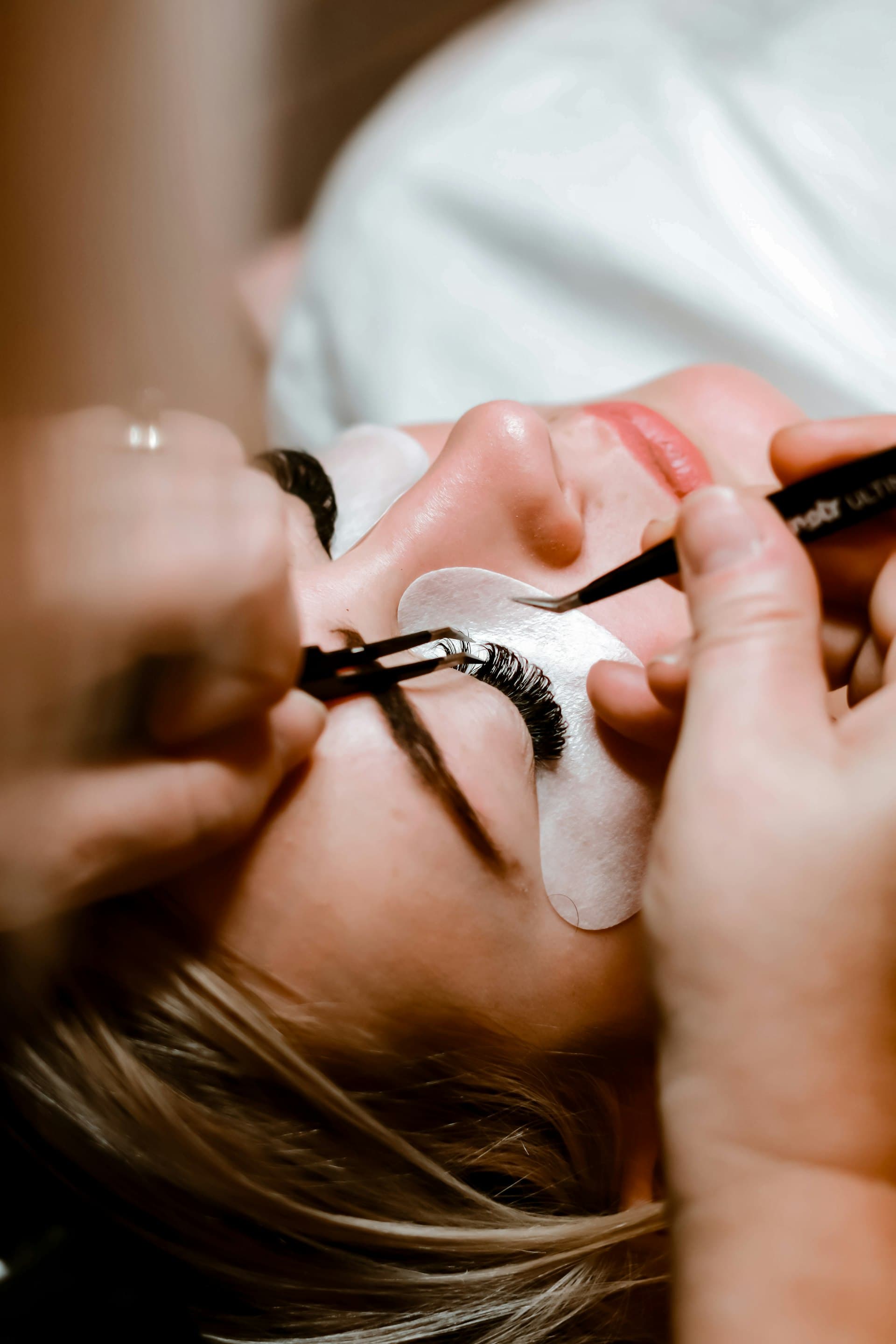
A few years ago, dozens of women I have since trained were exactly where you might be today: in front of a screen, wondering whether they could really leave a job that no longer fulfilled them to make lash extensions their profession.
The answer is yes, and it is more accessible than people think. No long studies, no large startup capital. But it does take real skill, the right legal status, and a structured approach. Here, step by step, is how to become a lash technician.
What the job really involves
Being a lash technician is not just "applying lashes". It is a craft of precision and client care. Day to day, you will:
- Run consultations to assess natural lashes and understand each client's goals
- Apply extensions in classic, Russian or hybrid volume as appropriate
- Carry out fills and removals
- Advise clients on aftercare between appointments
- Run your business: bookings, hygiene, stock, accounting, communication
It is detailed work that demands patience and excellent eyesight, but also genuine people skills. Many clients return as much for the result as for the calm the appointment gives them.
Do you need a diploma to start?
This is the first question, and the good news is clear: in France, no state beauty diploma is legally required to apply lash extensions. It is not an act reserved for diploma holders.
That said, working without serious training is a very bad idea: you work millimetres from the eye, with a powerful adhesive. Poor technique can irritate, damage natural lashes, even trigger reactions. So what matters is not a mandated diploma but high-quality professional training and a recognised certificate. I set out exactly what the sector's three documents are worth, and how to check them, in my article on the eyelash extension diploma.
Which training should you choose?
Choose a Qualiopi-certified training centre: it guarantees an audited program and is the condition for public funding. Good training must include theory (anatomy, hygiene, products) and, above all, plenty of supervised practice on live models, not just mannequins. At Beauty'n'Form, the lash extension course is Qualiopi-certified and puts the emphasis on supervised practice on live models.
I describe my full pathway, the techniques taught and how the days unfold in my article Eye beauty training without a diploma. And if funding is holding you back, my guide Funding your beauty training explains the options for covering all or part of the cost.
To understand the techniques you will learn and their potential, also read Russian Volume vs Classic Lash Extensions. The full catalogue is on the training page.
Which legal status should you choose?
To start, the micro-enterprise (self-employed status in France) is by far the simplest and best-suited option:
- Free to set up online in minutes
- Light accounting, contributions proportional to turnover
- Ideal for testing the activity, part-time or full-time
As your client base grows, you can move to a company structure to optimise tax and protect your assets. Also take out professional liability insurance: it is essential from your very first client.
How much does a lash technician earn?
It varies widely, because you set your prices and your pace. Here are realistic orders of magnitude I observe around Toulouse, purely as a guide:
| Activity profile | Pace | Indicative monthly income |
|---|---|---|
| Side activity, mobile/home-based | 5 to 8 sets/week | €800 to €1,500 |
| Main activity, self-employed | 15 to 20 sets/week | €2,500 to €4,000 |
| Established studio, loyal clients | 25+ sets/week | €4,000 and up |
These figures are not promises: they depend on your prices, area, consistency and ability to retain clients. A technician who masters Russian volume and offers several treatments charges more than a beginner doing classic only. Training and specialisation are your best income levers.
How to start, concretely
Three models are open to you, from the lightest to the most committing:
- Home-based or mobile: the most accessible start, low overheads, perfect for building a first client base.
- Shared salon or chair rental: you benefit from a location and footfall without the cost of your own premises.
- Your own studio: full freedom, best considered once your client base is solid.
Whichever model you choose, two things make the difference from day one: polished before/after photos and a consistent social presence, and impeccable client follow-up. Word of mouth remains, by far, your best marketing tool in this profession.
The qualities that lead to success
Beyond technique, certain traits build lasting careers: precision and patience, of course, but also strict hygiene, good listening, and a willingness to keep learning. Trends evolve (mega-volume, "wet look" effects, new curls), and the best technicians never stop training.
If you recognise yourself in this portrait, you already have the essentials. The rest — the technique — can be learned, and teaching it is precisely my job.
Frequently Asked Questions
Yes. In France, a state beauty diploma is not required to apply lash extensions. What is essential is serious professional training, ideally at a Qualiopi-certified centre, plus professional liability insurance.
Initial lash extension training usually takes 3 to 5 days depending on the techniques covered. That is enough to start, provided you then practise regularly. Many return a few months later for advanced training to move up to Russian volume or mega-volume.
The micro-enterprise is the simplest status to launch: free setup, light accounting, contributions proportional to turnover. You can move to a company structure later, as your business grows.
Yes, because equipment costs are reasonable and demand is strong and recurring (fills every 3 to 4 weeks). Profitability depends mainly on your pace, prices and client retention. Specialising, such as in Russian volume, clearly raises your average ticket.
Several options exist depending on your situation: France Travail, OPCO, FAFCEA, your company's skills-development plan, or paying in instalments. The key is to choose a Qualiopi-certified provider such as Beauty'n'Form. I support you through the process from your first contact.

I will never forget how it felt when my first client trusted me, nor the feeling of seeing my students open their own businesses. This profession changes lives, provided you start well. If you are considering a career change, write to me: I will tell you honestly whether your project looks solid and how to build it.