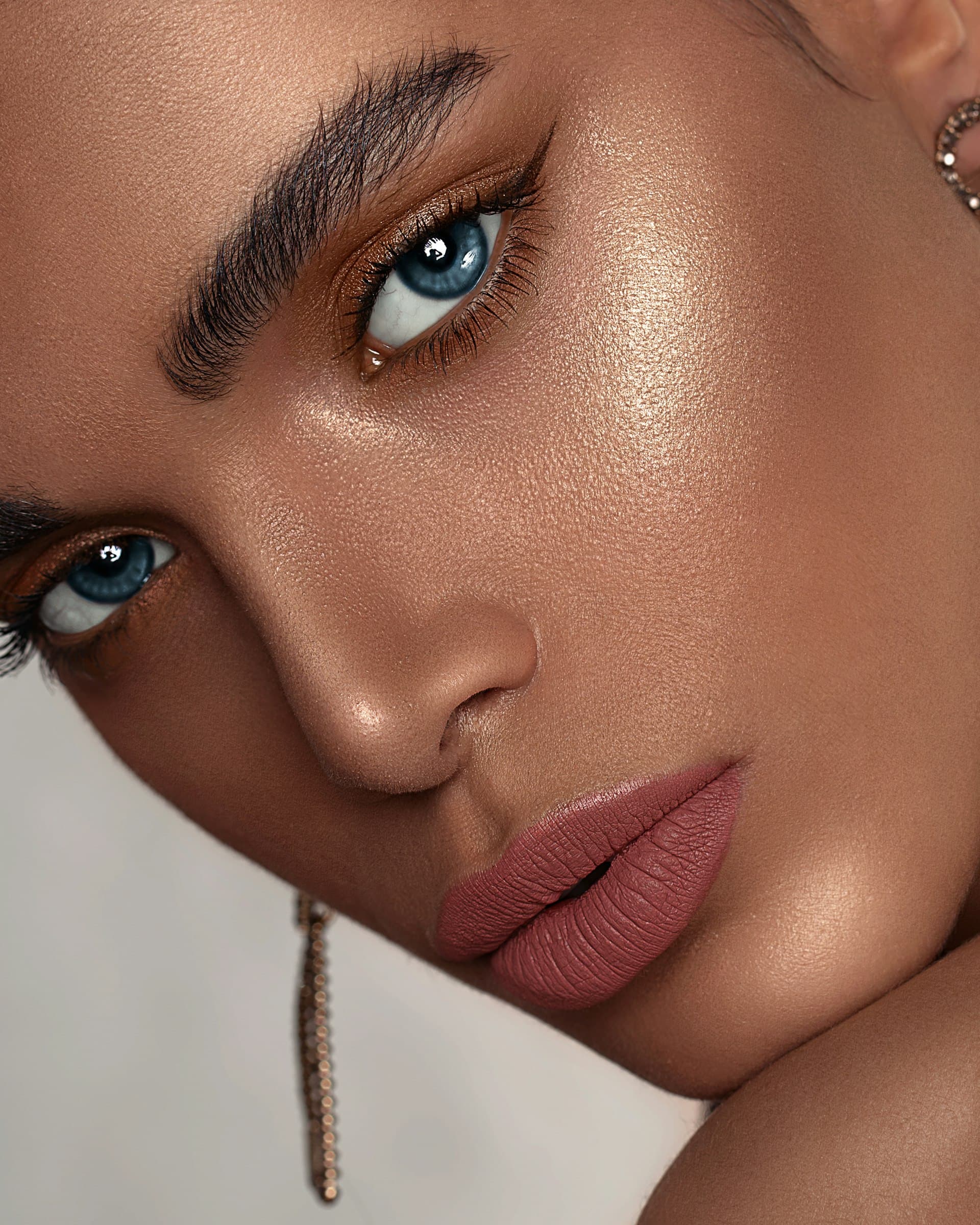
Beauty'n'Form no longer offers semi-permanent makeup. This article stays online for its informational content. For brows we do brow lift, shaping and tinting: see the brow lift and brow service.
Imagine waking up every morning with perfectly defined brows and softly tinted lips, without touching a single brush. That is exactly what semi-permanent makeup delivers, and it is one of the techniques that most transforms the daily routine of those who choose it.
It is also an advanced technique that demands real training and great discipline. In this guide I explain everything: what dermopigmentation is, the techniques for brows and lips, the healing process, and contraindications.
What is semi-permanent makeup?
Semi-permanent makeup, also called dermopigmentation, implants pigment into the superficial layers of the skin using a very fine needle or a digital machine. Unlike a classic tattoo, the pigment sits less deeply and is designed to fade gradually.
That is what makes it "semi" permanent: the result typically lasts 1 to 3 years depending on the technique, area, skin type and lifestyle. A yearly touch-up refreshes the colour and keeps a crisp finish.
The goal is never a heavy, obvious makeup look, but to enhance features naturally: rebuild sparse brows, restore shape and colour to pale lips, correct an asymmetry.
Brows: microblading, powder, combination
This is the most requested area. Three main techniques exist, and the right choice depends on your skin and the effect you want.
- Microblading creates fine, hair-like strokes with a manual hand tool. A very natural effect, ideal on normal to dry skin. It fades faster on oily skin.
- Powder (ombré) brows lay down a soft gradient of pigment, like a brow lightly filled with pencil. More versatile, it suits all skin types, including oily.
- Combination mixes strokes (microblading) and shading for a result that is both natural and structured.
The choice is always made in consultation, after assessing your skin and natural brow shape. If you first want to understand the foundations of brow work (shape, henna, brow lift), read my article Brow Lift, Henna and Shaping: The Guide to Perfect Eyebrows.
Lips: the lip blush technique
For lips, the most popular technique today is lip blush (a watercolour effect). Rather than drawing a hard outline, a soft, luminous tint is diffused across the whole lip for a natural "healthy glow", like a tinted balm that stayed on all day.
This technique can:
- Revive pale lips or lips that lose colour with age
- Add optical volume without injections
- Correct a slight asymmetry or soften an irregular outline
- Brighten the complexion, since lip colour lifts the whole face
Colour choice is decisive: it is based on your complexion, your natural lip colour and the desired result. A good pigment always settles into a flattering shade once healed.
Techniques compared
| Area | Technique | Effect | Typical longevity |
|---|---|---|---|
| Brows | Microblading | Drawn hairs, very natural | 1 to 2 years |
| Brows | Powder (ombré) | Soft gradient, lightly done | 2 to 3 years |
| Brows | Combination | Natural and structured | 2 to 3 years |
| Lips | Lip blush | Soft tint, healthy glow | 2 to 3 years |
Healing: 50% of the result
Successful semi-permanent makeup is 50% technique in the chair and 50% healing at home. The colour right after the session is never the final colour: it darkens, then lightens noticeably over one to two weeks.
During healing (roughly 7 to 10 days), a few simple rules apply:
- Do not wet or rub the area for the first few days
- Apply the recommended healing balm, sparingly
- Avoid sun, sauna, steam room and pool while healing
- Never pick the small scabs that form, or you will lift the pigment out
The touch-up usually takes place 4 to 6 weeks after the first session. It is essential: it locks in the final result, fills any areas where pigment took less, and adjusts the intensity.
Contraindications and safety
Dermopigmentation breaks the skin barrier: hygiene and safety are non-negotiable. Some situations rule out or postpone the treatment: pregnancy and breastfeeding, uncontrolled diabetes, anticoagulant therapy, healing disorders (keloids), certain skin conditions on the area, or recent isotretinoin treatment.
A serious professional works with single-use tools, EU-compliant pigments, and has you complete a consultation form. In case of medical doubt, they will refer you to your doctor before any session. That rigour is what distinguishes a true professional.
Frequently Asked Questions
Discomfort is very mild thanks to a numbing cream. Most clients describe a tingling or light scratching sensation that is easily tolerated. Lips are generally a little more sensitive than brows.
Depending on the technique, area and skin type, the result lasts 1 to 3 years. Oily skin fades pigment faster. A yearly touch-up refreshes the colour and keeps a crisp finish over time.
Microblading gives a very natural hair effect, ideal on normal to dry skin. Powder brows suit all skin types, including oily, and last longer. The choice depends on your skin and the look you want, and is decided in consultation.
It is completely normal. The shade darkens during healing, then lightens noticeably over one to two weeks to reveal the true colour. This is why the touch-up at 4 to 6 weeks is essential to fine-tune the final result.
Yes. Pregnancy, breastfeeding, uncontrolled diabetes, anticoagulant therapy or certain healing disorders rule out or postpone the treatment. A consultation form is always completed before any session, and medical advice may be required.
Semi-permanent makeup demands an artist's eye and a nurse's rigour: it is that blend that I love. That same standard is what I bring to every treatment and training I offer today.