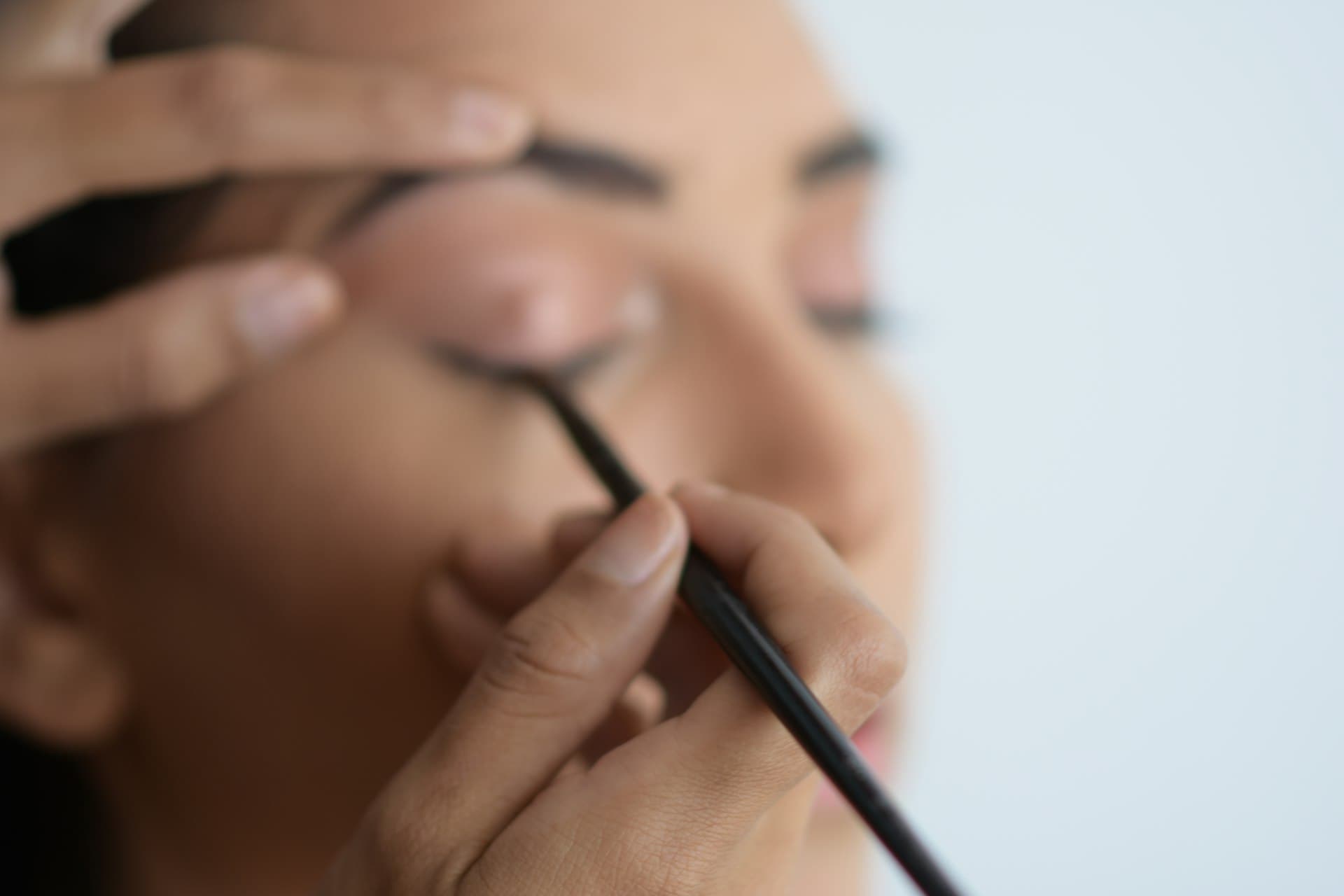
Beauty'n'Form no longer offers semi-permanent makeup. This article stays online for its informational content. For brows we do brow lift, shaping and tinting: see the brow lift and brow service.
"Microblading or powder brows?" Ever since brow dermopigmentation went mainstream, this is the question I hear most. Both techniques create beautiful semi-permanent brows, but they do not work the same way, nor on the same skin types.
If you are new to the topic, start with my complete guide to semi-permanent makeup for brows and lips. Here, I dig into the comparison to help you choose.
Microblading in detail
Microblading uses a manual hand tool with micro-needles that deposits pigment in fine, hair-like strokes. The result is strikingly natural: it looks like extra hairs rather than makeup.
- Effect: very natural, hair by hair
- Ideal skin: normal to dry
- Limitation: on oily skin, strokes tend to blur and fade faster
- Longevity: 1 to 2 years on average
It is the perfect technique to fill discreet gaps or redraw a line on brows that already have some density.
Powder (ombré) brows in detail
Powder, or ombré, brows are usually done with a machine that sprays pigment in fine dots to create a gradient. The finish looks like a brow lightly filled with pencil or powder: denser at the tail, softer at the head.
- Effect: soft, made-up gradient
- Ideal skin: all skin types, including oily
- Strength: longer wear and often simpler healing
- Longevity: 2 to 3 years on average
It is the ideal choice if you like the "filled brow" look, if you have oily skin, or if your brows are sparse and lack density.
The combination technique
The combination technique brings together the best of both: microblading strokes at the head of the brow for naturalness, and a powder veil over the rest for density and wear. It is what I often recommend for a result that is both natural and structured, especially on combination skin.
Side-by-side comparison
| Criteria | Microblading | Powder (ombré) | Combination |
|---|---|---|---|
| Tool | Manual hand tool | Machine | Both |
| Effect | Natural hairs | Soft, filled gradient | Natural and structured |
| Ideal skin | Normal to dry | All types, incl. oily | Combination to oily |
| Longevity | 1 to 2 years | 2 to 3 years | 2 to 3 years |
| Healing | A little more delicate | Generally simpler | In between |
| Sensation | Light scratching | Light vibrations | Mixed |
How to choose: the golden rule
The number-one factor is not the trend, it is your skin type. Dry skin and a craving for total naturalness: microblading. Oily skin or a desire for a made-up look that lasts: powder. In between, or for the best wear-to-natural compromise: combination.
In consultation, I assess your skin, your hair density and the shape to rebuild before recommending anything. An honest assessment avoids microblading's main letdown: choosing it on oily skin, where it will not hold. To prepare or maintain the shape between sessions, classic brow work still helps: I cover it in Brow Lift, Henna and Shaping.
Healing and touch-up
Whatever the technique, the colour darkens then lightens noticeably over one to two weeks, and a touch-up at 4 to 6 weeks is essential to lock in the result. The healing rules (no water, no sun, no picking) are detailed in my semi-permanent makeup guide.
Frequently Asked Questions
That is its main limitation. On oily skin, the fine strokes tend to widen and fade faster. Powder or combination brows give far better results and longer wear on this skin type.
Powder brows generally last 2 to 3 years, versus 1 to 2 years for microblading. Wear also depends on your skin, sun exposure and skincare routine. A yearly touch-up extends the result in every case.
Discomfort stays mild thanks to a numbing cream. You mostly feel light scratching for microblading and small vibrations for powder. The brow area is generally well tolerated.
Yes, it is common, especially when skin becomes oilier or you want a denser effect. We first assess the existing pigment, then adapt the new technique. A consultation lets us plan the transition.
Plan for a first session, then a mandatory touch-up 4 to 6 weeks later. These two appointments make up the full treatment. After that, a simple yearly touch-up maintains the result.
There is no objectively superior technique: there is the one that respects your skin and your style. That is the whole art of the consultation, and it is what I pass on to my students so they advise honestly, every time.